Goitre is the swelling of thyroid gland and appears on the back a
person's neck. Medical Research suggests that women are more prone to
Goitre than men. The common cause of Goitre is deficiency of iodine in the diet. Iodine in its organic form is required by the thyroid gland in its secretion.
Take Iodine in its organic form. Eat foods like turnips, carrots,
garlic, pineapples, whole rice, tomatoes, watercress, strawberries,
guavas; lettuce, onions, oats, citrus fruits, egg yolks, seafoods, etc should be taken in ample amounts.
Goiters of all types will regress with treatment of
the underlying condition. Dietary iodine may be all that is needed.
However, if an iodine deficient thyroid that has grown in size to
accommodate its deficiency is suddenly supplied an adequate amount of
iodine, it could suddenly make large amounts of thyroxin and cause a
thyroid storm, the equivalent of racing your car motor at top speed.
Hyperthyroidism can be treated with medications, therapeutic doses of
radioactive iodine, or surgical reduction. Surgery is much less common
now than it used to be because of progress in drugs and radiotherapy.
Radioactive iodine. In some cases, radioactive iodine is used to treat
an overactive thyroid gland. The radioactive iodine is taken orally and
reaches your thyroid gland through your bloodstream, destroying thyroid
cells. The treatment results in diminished size of the goiter but
eventually may also cause an underactive thyroid gland. Hormone
replacement with the synthetic thyroid hormone levothyroxine then
becomes necessary, usually for life.
Showing posts with label thyroid. Show all posts
Showing posts with label thyroid. Show all posts
Thursday, March 26, 2015
How Can Goiter be Cured?
1:31:00 PM
The best treatment for a goiter is a subtotal thyroidectomy. This is an
operation in which most of the thyroid gland is removed. There are some
research studies suggesting that putting a patient on a thyroid hormone
pill everyday may help to shrink goiters or keep them from growing.
However, there are other studies suggesting that this may not work.
There are also studies suggesting that even a mild overdose of thyroid
hormone, if taken for many years, can result in osteoporosis and may put
older individuals at risk for abnormal heart rhythms.
A physical examination usually reveals redness and swelling of blood vessels in the conjunctiva. The doctor may take a specimen of conjunctival scrapings to determine if the conjunctivitis is bacterial, viral or caused by other sources, such as allergies or chemicals.
Make a smooth paste using little water and watercress seeds and apply it on the goiter swelling. Watercress is an excellent source if iodine and when taken internally will also help reduce goiter symptoms.
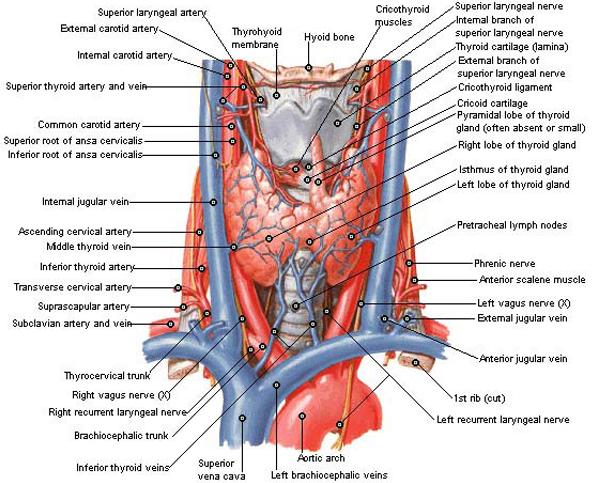
Goitre, also known, as bronchocele is a term applied to the swelling on the front of the neck caused by the enlargement of the thyroid gland. It is caused by deficiency of iodine in the diet. It is an endemic disease prevalent in the hill districts of the country. The growth of the thyroid gland is generally unattended by pain but if the goiter becomes large it may cause hoarseness. Too enlarged a goiter interferes with breathing and capacity to swallow.
Another best way to get rid of thyroid malfunctioning is go for fasting. Keep yourself on fruits and vegetable juices. After couple of weeks, start with light but nutritious diet. Some of the Ayurvedic herbs like 'Kanchanar' have been used in Ayurvedic science since years to treat thyroid related problems. For this, one can go for its leaves or can take any patent medicines containing the herb. It is also used as a natural cure for goiter.By Peter Hutch
A physical examination usually reveals redness and swelling of blood vessels in the conjunctiva. The doctor may take a specimen of conjunctival scrapings to determine if the conjunctivitis is bacterial, viral or caused by other sources, such as allergies or chemicals.
Make a smooth paste using little water and watercress seeds and apply it on the goiter swelling. Watercress is an excellent source if iodine and when taken internally will also help reduce goiter symptoms.
Goitre, also known, as bronchocele is a term applied to the swelling on the front of the neck caused by the enlargement of the thyroid gland. It is caused by deficiency of iodine in the diet. It is an endemic disease prevalent in the hill districts of the country. The growth of the thyroid gland is generally unattended by pain but if the goiter becomes large it may cause hoarseness. Too enlarged a goiter interferes with breathing and capacity to swallow.
Another best way to get rid of thyroid malfunctioning is go for fasting. Keep yourself on fruits and vegetable juices. After couple of weeks, start with light but nutritious diet. Some of the Ayurvedic herbs like 'Kanchanar' have been used in Ayurvedic science since years to treat thyroid related problems. For this, one can go for its leaves or can take any patent medicines containing the herb. It is also used as a natural cure for goiter.By Peter Hutch

Tuesday, June 24, 2014
9 Top Thyroid-Disrupting Toxins to Avoid
6:50:00 AM
Every cell in your body depends on your thyroid gland to function
properly. Specifically, your cells use the hormones produced by your
thyroid to regulate a range of metabolic processes, including getting
energy from the food you eat.
Your thyroid hormones also help
regulate your body temperature and play a role in the proper functioning
of your brain, heart, muscles and other organs. When working properly,
your pituitary gland will release thyroid-stimulating hormone (TSH),
triggering your thyroid to produce the thyroid hormone thyroxine (T4),
which is then converted into triiodothyronine (T3), in the precise
amounts your body needs to thrive.
However, this is a very
delicate system, one that is easily disrupted by outside influences,
including the chemicals that are ubiquitous in our environment. This is
one prominent factor that is increasingly being linked to disruptions of
the thyroid, disruptions that can seriously impact your health.
What Types of Chemicals Can Disrupt Your Thyroid?
There are concerns regarding numerous chemicals that are currently abundant in the environment.
Nine of the chief offenders include:
1. Phthalates
Phthalates
are widely used chemicals often used to make plastic flexible. They're
commonly found in shower curtains, medical tubing and plastic toys, as
well as in numerous personal care products such as fragrances, nail
polish and lotions. Because the chemicals are so widely used, they're
also present in drinking water supplies.
Known to cause
reproductive and developmental toxicity in animal studies, phthalates
can also impact thyroid regulation by decreasing thyroid hormone
receptor activity -- at levels found in drinking water.[1] Currently,
drinking water treatments do not effectively remove thyroid-disrupting
chemicals like phthalates from your drinking water.
2. Flame Retardants
Polybrominated
diphenyl ether (PBDE) are flame retardant chemicals commonly used in
furniture foam, carpets, upholstery, clothing, toys, draperies,
electronics and more. It's estimated that up to 97 percent of Americans
have PBDEs in their blood.
The chemicals easily accumulate in your
fat cells, and increased levels have been linked to a decrease in TSH
levels and an increased risk of subclinical hyperthyroidism in pregnant
women.[2]
3. Bisphenol A (BPA)
BPA is
another plastics chemical commonly used in polycarbonate water bottles,
baby bottles, plastic toys, medical tubing, food packaging, dental
sealants and more. Widely known as an endocrine disrupter that can cause
developmental problems, early puberty, genital deformities and more,
BPA has also been linked to thyroid disruption.
In one study on
frog tadpoles, low levels of BPA exposure -- similar to those found in
human infants -- interfered with the T3 hormone and thereby suppressed
genes controlled by T3, resulting in slowed development and other
changes.[3] Previous animal studies have also linked BPA to disruptions
in thyroid receptors and thyroid function.
4. Dioxin
Dioxin
is a group of chemicals -- including polychlorinated biphenyls (PCBs),
polychlorinated dibenzo dioxins (PCDDs), and polychlorinated dibenzo
furans (PCDFs) -- that are formed as byproducts from industrial
processes like chlorine paper bleaching, pesticide manufacturing and
smelting. Dioxin was also a part of the toxic Agent Orange used during
the Vietnam War.
PCBs, another type of dioxin, were widely used
prior to 1977 when they were banned due to environmental concerns.
However, they and other dioxins still exist in abundance in the
environment, including in your food (especially meat, dairy and
seafood).
Not only is dioxin a known carcinogen, but it also has
been found to interfere with the production, transportation, and
metabolism of thyroid hormones.[4]
5. Perfluorinated Chemicals (PFOA)
PFOA
and a related chemical called PFOS (perfluorooctane sulfonate) --
widely used in nonstick cookware, stain-resistant materials and food
packaging -- can also cause trouble with your thyroid.
One study
found that people with high levels of PFOA in their blood were twice as
likely to have thyroid problems as those with the lowest levels[5] while
past studies have also linked the chemical to decreased thyroid hormone
levels. It's not known how PFOA may cause thyroid disease, or whether
the chemical directly impacts the thyroid or instead the immune system,
causing it to attack the thyroid gland.
6. Fluoride
Most
municipal drinking water supplies in the United States contain added
fluoride, a measure that's intended to reduce rates of tooth decay. It
can also enter water supplies from fluoride-containing rocks and soils.
Studies
have shown that exposure to fluoride can result in decreased thyroid
function, including at exposure levels of 4 mg/L or less, which is the
EPA maximum allowable concentration for fluoride in drinking water.[6]
The effects may be especially problematic for children and people who
drink a lot of water.
7. Perchlorate
Perchlorate
is a byproduct of rocket fuel production that is now a widespread
contaminant in drinking water, certain fruits and vegetables and dairy
products from cows that eat contaminated grasses.
Research
suggests it can inhibit your thyorid's ability to absorb iodine, leading
to an underactive thyroid, or hypothyroidism, even at low-level
exposure. In a study by the Centers for Disease Control and Prevention,
it was estimated that 44 million U.S. women -- including those who are
pregnant, have lower iodine levels or have subclinical hypothyroidism --
could be at increased risk of thyroid problems from perchlorate
exposure.[7]
8. Thiocyanate
Thiocyanate is a
chemical found in cigarettes and certain foods. It may inhibit iodine
uptake by the thyroid, leading to decreased production of thyroid
hormone.
9. Pesticides
Thyroid disease has
also been linked to pesticide exposure from a variety of sources. Among
women whose spouses were licensed pesticide applicators that had used
organoclorine insecticides, rates of hypothyroidism were 1.2 times
higher than in the general population. Increased rates of thyroid
disease were also found among women exposed to fungus killers, herb
killers and other types of pesticides.[8]
How to Reduce Your Exposure to Thyroid-Disrupting Chemicals
Chemicals
are ubiquitous in our environment, but there are steps you can take to
help cut back on your exposure. Some of the top suggestions include:
- Use natural personal care products with ingredients you are familiar with. At the very least look for phthalate-free options.
- Buy children's toys made of natural materials, or at least phthalate-free plastic.
- Avoid exposure to old carpeting and carpet pads and polyurethane foam products (upholstered furniture, mattresses, pillows) manufactured prior to 2005 (these are most likely to contain PBDEs).
- Store your food and beverages in glass or ceramic containers instead of plastic, and do not reheat foods in plastic containers or covered in plastic wrap.
- Limit your use of canned goods and soda cans (the linings often include BPA), or look for BPA-free canned items.
- Trim the fat from your meats to cut back on dioxins stored in animal fats, and choose leaner cuts of meat.
- Avoid polyvinyl chloride (PVC) plastics, such as plastic milk jugs.
- Look for unbleached sources of household products like coffee filters, tampons, diapers, paper towels, etc.
- Avoid using non-stick cookware, opting for stainless steel, ceramic, or other inert materials instead.
- Install a reverse osmosis water filtration system in your home to remove fluoride from your drinking water, and consider a comprehensive filter to also remove other chemicals like perchlorate.
- Avoid smoking cigarettes and exposure to second-hand smoke.
- Choose organic foods as much as possible to limit your exposure to pesticides. Also, do not use the chemicals around your home (including chemical lice treatments and flea and tick products for pets).
With the evidence increasingly showing that exposure to
environmental chemicals, even at low levels, can negatively impact your
thyroid, and the knowledge that even small changes in your thyroid
homeostasis can influence your health, it's important to reduce your
exposure as much as possible.
By making small changes in your food
choices and your personal care products and paying special attention to
finding household goods made from primarily natural sources, you'll be
off to a great start in protecting your thyroid function from these
pervasive toxins.
References
1. Environmental Science and Technology 2010, 44 (17), pp 6863-6868
2. Environmental Health Perspectives October 2010, 118(10)
3. Endocrinology Vol. 150, No. 6 2964-2973
4. Alternative Medicine Review 2009 Dec;14(4):326-46
5. Environmental Health Perspectives 118(5) May 2010
6.
Committee on Fluoride in Drinking Water, National Research Council,
Fluoride in Drinking Water: A Scientific Review of EPA's Standards, 2006
7. Environmental Working Group News Release October 4, 2006
8. American Journal of Epidemiology (2010) 171 (4): 455-464

Friday, March 28, 2014
9 Common Causes for Thyroid Problems
4:39:00 AM
How you sleep, how easy it is to wake up, and how much energy and
stamina you have during the day is directly related to the levels of
the thyroid hormones. The thyroid is heavily involved in so many more
processes in the body as well!
Hypothyroidism is a common health
condition in the U.S. and means that the thyroid gland is not active
enough. It may cause symptoms such as weight gain, tiredness, pale and
cold skin, constipation, high cholesterol levels, weakness, and joint
pain. The opposite condition is called Hyperthyroidism in which the
thyroid gland is too active. This may result in symptoms such as weight
loss, tremors, heart palpitations or rapid heartbeat, difficulty
sleeping, and so forth. But naturally, the thyroid is a sneaky organ and
your symptoms typically won't be "textbook" as described or all occur
at the same time. It could be something as subtle as noticing you just
can't make it through a day without coffee anymore.
The blood work
performed by doctors is typically a "basic" or "expanded" thyroid
panel, and can include variety of measurements. Normal values are
constantly changing. As a physician, I am only interested in the
optimal, ideal specific range of these values, whereas many outdated
laboratory values have a great range and a different motivation and view
point for what's normal.
Here's briefly how the thyroid gland
works and don't worry, I won't bore you with science! The thyroid is
like middle management in the corporate world. His office is located in
the throat, wrapped around our windpipe as two lobes. His big time boss
is the brain, who works up at corporate headquarters. That's how body
works - the brain is the master control of every organ, tissue, muscle,
and cell in the body. The thyroid's upper management is the pituitary
gland, whom he also takes orders from. Thyroid manages many functions of
the corporation especially the customer service teams, but instead of
sending out memos all day from his desk, he sends out hormones. Hormones
are the messages that act out what the brain commands. So he send out
hormones (messages) to his customer service team to go out into the body
and check in with every single cell (customers). They stop at every
cell to see if its doing okay - does it need more nutrients? More
oxygen? Anything? More important than that, the hormones get to call on
some large important customers. For example hormones help the heart
utilize cholesterol. His best customer service representatives are T3
and T4 and are his right hand team. For that reason, T3 is the most
active thyroid number measured. This is certainly not the complete
picture, just an overview of what the thyroid does.
Did you know
that there's a real definition of "being healthy?" It's the definition
adopted by all major medical textbooks, including Gray's Anatomy (the
textbook that's the corner stone of the entire medical profession, not
the television show). Being healthy is the ability to function at one
hundred percent mentally, physically, and socially. This definition
tells me that health is more than just the physical body, it's all
encompassing. And health is about function. Nowhere in that definition did it discuss how someone feels. It's about how well the body works beneath the surface and adapts for you.
Here are 9 causes of thyroid levels that are off on your blood work, and what further steps might you want to explore:
1) Environmental Factors.
The body is shutting down because it's exhausted. The two most common
examples of environmental factors affecting the thyroid gland are high
stress levels and a lack of sleep. Sleep is literally the body's time to
heal itself and depriving ourselves of that has a much greater effect
than we realize. High stress levels will cause excess cortisol in the
body, which is a hormone linked to increased risks of heart disease (and
other conditions) and keeps your body in the "flight or fight" response
mode. These are the two first things that I recommend all of my
patients to address. Here are some tips for sleeping well and lowering
stress:
a. Deep breathing exercises
b. Use of essential oils like lavender
c. Eliminate tvs, cell phones, etc. in the bedroom
d. Yoga, meditation, or stretching to promote a calm, clear mind
2) Gastrointestinal Function.
Not only does our digestive system break down food to use as nutrients,
it also contains almost 80% of our immune system! Food Intolerances are
a common cause of digestive problems and there is a strong link in the
research to Gluten Intolerance and Celiac Disease with thyroid
imbalances. Many people with suspected gluten intolerance also have many
other hidden undetected food intolerances that mimick similar symptoms.
3) Toxicity.
A common sign of toxicity in the body can be bags underneath the eyes.
Liver is our main organ responsible for detoxing the body and preventing
any garbage from hanging around to destroy our tissues. If a need for
detoxing exists, it can involve dietary changes, adding more vegetables
to the diet in the form of Juicing in order to make the internal body
conditions inhospitable for toxins, infrared saunas, and acupuncture to
balance energy meridians corresponding to these organs. One of my tips
is to drink a mug of warm water with half a fresh squeezed lemon every
morning 15 minutes before breakfast. It gets the liver active and ready
to work!
4) Hormonal Imbalances such as
pregnancy, contraceptive use, estrogen / hormone replacement therapy, or
bowel dysfunctions. Too much estrogen will increase the activity in the
thyroid gland. Estrogen is also used as a medication for which the
effects are over played and risks minimized. Research and results on
Hormone Replacement Therapy now show that it does not protect anyone
from incontinence, Alzheimer's, heart disease, and so forth but it
actually increases your risk for cancer. Other natural ways to resolve a
hormonal imbalance, especially around menopausal age are acupuncture or
a physician grade nutritional supplement prescription.
5) Consumption of soy products and non-organic dairy. Soy
and non-organic dairy both will increase estrogen in the body and
therefore affect the thyroid gland. I would recommend anyone (regardless
of your health condition) to eliminate both of these items from your
diet. Remember, both of these are very sneaky and hidden in many
processed foods.
6) Constipation. Too many toxins
being recycled in our bowels from lack of elimination will put extra
estrogen into system. My favorite, most effect and natural solutions for
constipation are acupuncture, dietary changes like eliminating sugar
and grains, probiotics supplementation, food intolerance testing, other
lab measurements that could enlighten the reason for constipation.
7) Nutritional Deficiencies
such as B12 or Iron deficiency. Some of the signs of nutrient
deficiencies are similar to symptoms of hypothyroidism. Reasons that one
could have nutrient deficiencies could include lack of nutritional
dietary habits or heavy metal toxicity (which is actually much more
common than it sounds). Hair analysis is the best long term blueprint of
the body to assess for heavy metal toxicity or nutrient deficiencies.
8) Immune System Dysfunctions
such as adrenal problems which increase cortisol in the body, increase
your risk for heart disease (among other conditions) and keep your body
in constant "flight or fight" panic mode. Adrenal problems are typically
measured with easy, at home saliva testing.
9) Chronic Candidiasis
which may cause symptoms such as white patches in mouth, memory
problems, issues with sugar handling, gas and bloating, mucous in the
stool, and cold hands or feet. Ask your doctor about an easy blood test
to see if you have an acute or long term candida problem. Solutions for
candidiasis may involve dietary changes, detoxification, and using
natural herbs or supplements to resolve candida imbalance.

Thursday, November 28, 2013
Myxedema Madness: When Being Crazy Isn't in Your Head, But in Your Thyroid
5:52:00 AM
Your husband watches in dismay as the men in the white coats
chase you about the living room. Finally, with skill befitting a giant
botanist, an attendant captures you in a large net and wrestles you to
the ground. The second adds his expertise to the effort, his
three-hundred-fifty-pound bulk, by sitting squarely atop your skull.
You now consider your rage over the fallen flapjack to have been
somewhat of an overreaction.
With the straightjacket chaffing at
your neck, you call to your husband for help. Though his hesitation is
brief, you see the fear in his eyes. He thinks you've lost your mind.
You begin to tear up but, in a flash, you see that fatally wounded
flapjack laying helplessly on the kitchen floor and the nightmarish rage
overtakes you once again. Feeling it all slip away as they carry you
to the ambulance, you make one last desperate effort to escape the beds
at Bellevue. Looking over your shoulder you spot your husband, take
deep breath and shout, "It's not my fault - it's my thyroid!"
Your thyroid? Yes indeed - a condition known as Myxedema Madness mimics many psychiatric conditions.
Myxedema,
the medical term for hypothyroidism, is most commonly recognized by
well-known physical symptoms: weight gain, puffiness about the face,
dry skin, fatigue and a general slowing of the metabolism. However, the
emotional signs and symptoms are quite often overlooked. Or, even more
disturbingly, are attributed to non-existent mental health and
psychiatric conditions.
Myxedema Madness is a catchall phrase,
coined by Dr. Richard Asher in 1940, that encompasses a broad swath of
emotions ranging from minor anxieties, doubts and worries to full-blown
panic attacks and classic psychiatric conditions like schizophrenia.
Myxedema Madness typically manifests as a simple bout of depression and
is often treated as such, with antidepressants and advice to, "Slow down
- take it easy for a bit." Unfortunately, neither the pills nor the
pontification strike at the root of the issue.
If let untreated,
Myxedema Madness can quickly devolve into a deadly serious condition.
Minor anxieties may give way to major psychoses, delusions,
hallucinations and paranoia. An otherwise affable person may snap at
the slightest annoyance, exhibiting a degree of rage previously unseen.
The patient may be diagnosed as schizophrenic, psychotic or
manic-depressive.
The risk of misdiagnosis is increased because
hypothyroidism inordinately impacts women - particularly women over the
age of forty. As a result, the emotional difficulties are often
attributed to the "natural" process of aging, possibly due to the
empty-nest syndrome, the onset of menopause or other adjustments and
changes in life. The elderly, especially those already living in a
group home setting, face a doubly difficult task in receiving both the
proper diagnosis and treatment for this condition.
That's the bad
news. The good news is that diagnosis is actually quite
straightforward. A simple blood test is all that's needed to identify a
thyroid problem. The best news? When properly treated with a daily
thyroid hormone you'll be your old self in no time flat. No more
outbursts, no more voices and no more men in white coats. Which,
unfortunately, means no more shouting, "It's not my fault - it's my
thyroid!"
Yes... modern medicine is a double-edged sword indeed.
By
Tim Anderson

Sunday, September 1, 2013
How to Get Rid of Thyroid Problems Naturally
9:10:00 AM
Thyroid is a small gland located in our neck. The main purpose of
this gland is to produce hormones to run our metabolism properly. As
metabolism is one of the most important functions of our body; it can
trigger a host of disorders if it slows down or malfunctions.
There are two most common forms of thyroid diseases; hypothyroidism or hyperthyroidism. Your thyroid can be overactive or underactive depending upon the reason of the disorder. The major cause of hypothyroidism is inflammation of the gland. Once your thyroid is inflamed; it stops producing sufficient amount of hormone. The insufficient production of essential hormones triggers various diseases like excessive weight gain, insomnia, depression etc.
You can easily get rid of thyroid problems if you start taking care of your diet. You must start taking iodine rich diet as soon as you notice thyroid disease symptoms. Following are some natural treatment of thyroid diseases.
• Though iodized salt is the most common form of salt available in the market, make sure that the salt you eat has enough iodine in it. If you notice symptoms of thyroid problems; start taking iodine rich diets.
• Stop excessive smoking or alcoholism if you are suffering from hypothyroidism.
• Eat a balanced diet with ample quantities of Vitamin A, B, C and E.
• Broccoli, spinach, peanuts and soybeans are known to suppress thyroid functions therefore you must avoid these foods if you are suffering from thyroid problems.
• Vitamin D is essential for proper function of thyroid therefore make sure that you get enough exposure to sunlight. You may also try vitamin D supplements if you wish.
• If you are on some kind of medication that contains Lithium; you must stop using them after consultation with your physician.
There are two most common forms of thyroid diseases; hypothyroidism or hyperthyroidism. Your thyroid can be overactive or underactive depending upon the reason of the disorder. The major cause of hypothyroidism is inflammation of the gland. Once your thyroid is inflamed; it stops producing sufficient amount of hormone. The insufficient production of essential hormones triggers various diseases like excessive weight gain, insomnia, depression etc.
You can easily get rid of thyroid problems if you start taking care of your diet. You must start taking iodine rich diet as soon as you notice thyroid disease symptoms. Following are some natural treatment of thyroid diseases.
• Though iodized salt is the most common form of salt available in the market, make sure that the salt you eat has enough iodine in it. If you notice symptoms of thyroid problems; start taking iodine rich diets.
• Stop excessive smoking or alcoholism if you are suffering from hypothyroidism.
• Eat a balanced diet with ample quantities of Vitamin A, B, C and E.
• Broccoli, spinach, peanuts and soybeans are known to suppress thyroid functions therefore you must avoid these foods if you are suffering from thyroid problems.
• Vitamin D is essential for proper function of thyroid therefore make sure that you get enough exposure to sunlight. You may also try vitamin D supplements if you wish.
• If you are on some kind of medication that contains Lithium; you must stop using them after consultation with your physician.

Sunday, May 5, 2013
Proven Natural Treatment for Hypothyroidism
5:46:00 PM
Hypothyroidism refers to a condition where there is an
underproduction of thyroid hormones that is linked to depression,
fatigue, weight gain, insomnia, memory loss, dry skin, brittle and dry
hair, thickened tongue, constipation, and light or no menses.
As you may know, one of the causes of hypothyroidism is iodine deficiency. Iodine is an essential trace mineral and a very important ingredient in the thyroid hormones: thyroxine and triodothyronine.
Did you know that approximately 80% of the iodine found in the body is located in the thyroid?
By influencing the thyroid's activities, iodine plays a vital role in basic metabolism and bodily processes. For instance, it helps regulate body temperature and maintain energy levels. It also plays a key role in blood cell production, muscle and nerve function and, helps keep your hair, skin, teeth and nails strong and healthy. It even assists the body in the destruction of toxins.
Iodine is one of the natural remedies that can help boost thyroid function and eliminate the symptoms associated with this condition, including slow metabolism. But it's not the only one. There are other natural medicines such as herbs that can also positively impact under-active thyroids and help you feel more energized, happier and healthier.
Natural Treatment for Hypothyroidism
Fortunately, low thyroid function can benefit from a natural treatment reason why it's worth taking the time to learn more about your options. You may find that it is a safer way to alleviate the symptoms associated with an under-active thyroid gland than common prescription drug approaches. And even though you may be taking thyroid medication most of these natural remedies can be added to your treatment as long as you tell your doctor and he or she works with you to adjust your dose of medicine.
Proven Herbs for Low Thyroid Function
Some popular herbs that can help hypothyroid conditions and are commonly used are:
Ashwagandha root is also known as Indian ginseng or winter cherry. It is a well regarded herb in Ayurvedic medicine and has been traditionally used in cases of debility, impotence and premature aging. Recent research conducted with animals has shown that ashwagandha may stimulate thyroid function by enhancing the concentration of serum T4.
Kelp is a type of seaweed that is good for thyroid function, arteries, and nails. Kelp is rich in iodine, a mineral that is necessary for the synthesis of the thyroid hormones. It is also used to stimulate metabolism which is why it is often found in some herbal slimming supplements.
As you may know, one of the causes of hypothyroidism is iodine deficiency. Iodine is an essential trace mineral and a very important ingredient in the thyroid hormones: thyroxine and triodothyronine.
Did you know that approximately 80% of the iodine found in the body is located in the thyroid?
By influencing the thyroid's activities, iodine plays a vital role in basic metabolism and bodily processes. For instance, it helps regulate body temperature and maintain energy levels. It also plays a key role in blood cell production, muscle and nerve function and, helps keep your hair, skin, teeth and nails strong and healthy. It even assists the body in the destruction of toxins.
Iodine is one of the natural remedies that can help boost thyroid function and eliminate the symptoms associated with this condition, including slow metabolism. But it's not the only one. There are other natural medicines such as herbs that can also positively impact under-active thyroids and help you feel more energized, happier and healthier.
Natural Treatment for Hypothyroidism
Fortunately, low thyroid function can benefit from a natural treatment reason why it's worth taking the time to learn more about your options. You may find that it is a safer way to alleviate the symptoms associated with an under-active thyroid gland than common prescription drug approaches. And even though you may be taking thyroid medication most of these natural remedies can be added to your treatment as long as you tell your doctor and he or she works with you to adjust your dose of medicine.
Proven Herbs for Low Thyroid Function
Some popular herbs that can help hypothyroid conditions and are commonly used are:
Ashwagandha root is also known as Indian ginseng or winter cherry. It is a well regarded herb in Ayurvedic medicine and has been traditionally used in cases of debility, impotence and premature aging. Recent research conducted with animals has shown that ashwagandha may stimulate thyroid function by enhancing the concentration of serum T4.
Kelp is a type of seaweed that is good for thyroid function, arteries, and nails. Kelp is rich in iodine, a mineral that is necessary for the synthesis of the thyroid hormones. It is also used to stimulate metabolism which is why it is often found in some herbal slimming supplements.

Friday, May 3, 2013
Natural Remedies For Thyroid Problems - What Foods You Should Eat and Which Ones to Avoid
8:35:00 AM
You might consider natural remedies for thyroid problems. It's
quite understandable, actually, since you must have heard the side
effects of chemically-formulated drugs. Moreover, if you have been
researching the web about thyroid problems, surely, you must have read
somewhere that synthetic supplements may not even work as effectively as
the non-synthetic ones. Synthetic supplements contain only one thyroid
hormone, you see, while the latter covers several types, including T3
and T4 which are said to play key functions in controlling metabolism.
So, indeed, why not give natural remedies a shot then?
The
thyroid is actually just a small gland that is situated on the neck
area. You would think it's rather insignificant because of its small
size, but you would be surprised that this small gland has big
responsibilities. The thyroid is the only part of the body that absorbs
iodine, an essential element needed by the body to produce hormones
necessary to carry out metabolic processes. When there is absence of
this element, the thyroid becomes hyperactive or underactive.
Clinically, a hyperactive thyroid is termed hyperthyroidism, while an
underactive thyroid is referred to as hypothyroidism; either way means
that the thyroid is not functioning well at all.
In the case of
hyperthyroidism, there are more thyroid hormones in the bloodstream,
requiring the body more energy. The body reacts by increasing metabolic
rate to levels beyond the norm. While the result is that you lose
weight, you also lose energy in the process, and this explains why you
feel exhausted. Herbal treatments are available to treat
hyperthyroidism, and these include drinking Motherwort herbal tea, lemon
balm tea, and green tea. Motherwort controls palpitations that can
occur with hyperthyroidism, while lemon balm tea can help control the
thyroid. Green tea is recommended, too, because of its potent
antioxidant effect. What's also recommended is to avoid food sources
that are known to have stimulating effects, such as caffeine, wheat
grass, bladder wrack, and ginseng.
Hypothyroidism, on the other
hand, is a condition wherein the hormones in the bloodstream are not
sufficient enough. This causes the metabolism to slow down, leading to
weight gain, and making you feel less energized. There are several
natural remedies for thyroid problems like this, and these include
dietary changes and herbal or natural supplements.
The appropriate
diet designed for sufferers of hypothyroidism focuses on foods that are
abundant in iodine and thyroxine. Making the list are seafoods
including fish, seaweeds, chicken breast, avocados, lentils, bananas,
almonds, and coconut oil. Herbal supplements that consist of licorice,
bladder wrack, kanchanara, shilajeet, and ginger, are also highly
recommended.
You should consider scrapping chemically-produced
foods, especially highly processed foods. You are also advised to avoid
certain green vegetables like broccoli, cauliflower, spinach, and
Brussel sprouts as these contain enzymes that could somehow interfere
with the normal functioning of the thyroid system.
When you
exhibit signs and symptoms of thyroid problems, it would be a good idea
to talk to your doctor about some natural remedies for thyroid problems
to help you deal with all the discomforts associated with thyroid
imbalances.
Subscribe to:
Posts
(
Atom
)


